The planting window in most rice-growing regions lasts only three to four weeks, and a delayed transplanting schedule directly reduces tillering, increases weed pressure, and lowers yield. That is why the first purchase decision should not start with a brand or a price list, but with the two main types of rice transplanters: the walk-behind type and the riding type. Everything else, including row spacing, seedling tray capacity, engine power, planting speed, and daily coverage, depends on which of these two categories fits your fields.
Here is the short answer. Walk-behind transplanters are compact, lower-cost machines that an operator follows on foot, and they suit small, terraced, or fragmented fields. Riding transplanters are self-propelled machines with a seated operator, higher working speed, and larger row counts, and they are designed for medium to large paddy fields. Choose the type first, then compare individual models within that type.
The Two Main Types of Rice Transplanters
Agricultural machinery manufacturers classify transplanters by the operator's working position and the walking structure of the machine. A walk-behind transplanter is guided by an operator walking behind it, while a riding transplanter is operated from a seated platform and is fully self-propelled. In field practice, these two categories are referred to as the walking type and the riding type.
The practical differences appear in four areas: rows planted per pass, daily working capacity, operator fatigue, and purchase cost. The table below summarizes these differences so you can see at a glance which type matches your operation.
Feature comparison between the two main types of rice transplanters
| Feature |
Walk-Behind Type |
Riding Type |
| Rows planted per pass |
2, 4, 6, or 8 rows |
4, 6, 8, or 10 rows |
| Operator position |
Walking behind the machine |
Seated on the machine |
| Working speed |
0.3 to 0.5 m/s |
0.5 to 1.2 m/s |
| Typical daily coverage |
0.2 to 0.8 ha |
1.0 to 4.0 ha |
| Best field size |
Small plots, terraces, scattered fields |
Contiguous fields of 2 ha and above |
| Power range |
3 to 7 hp |
8 to 15 hp |
| Operator training |
Basic; simple adjustment points |
Moderate; hydraulic controls and fine-tuning |
These figures are typical, not absolute. Soil condition, seedling mat quality, water depth, and operator experience all shift the actual daily coverage in either direction. Use them as planning benchmarks rather than guarantees.
Walk-Behind Rice Transplanters
A walk-behind transplanter is the direct mechanical replacement for manual transplanting. The operator walks behind the machine and steers it along the row lines while the planting fingers push the seedling mat into the puddled soil. Because the machine is narrow and light, it can work on small plots, terraced fields, and headlands that a heavier machine cannot enter.
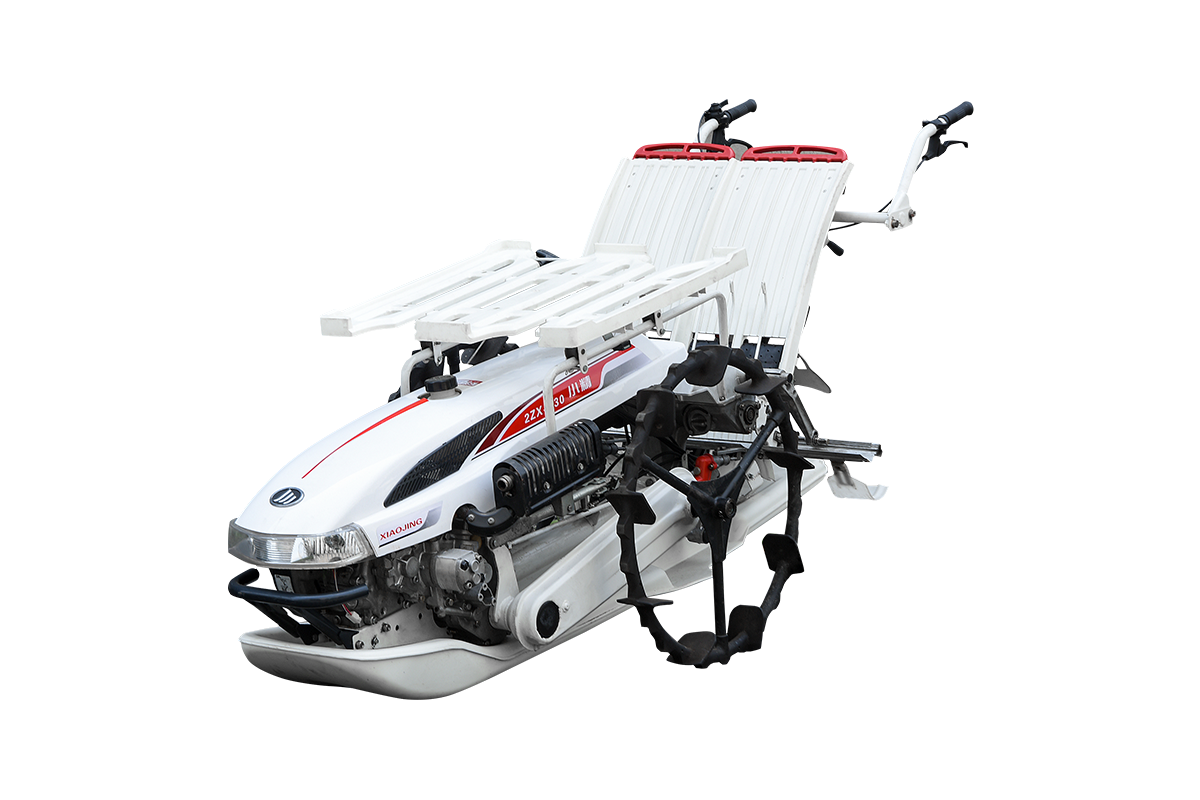
The most common configurations are two-row, four-row, and six-row models. A two-row machine is the easiest to transport and can turn on a narrow headland, while a four-row model balances speed and maneuverability for most family farms. Six-row and eight-row walking models exist for growers who want more coverage without stepping up to a riding machine.
Walk-behind transplanters allow adjustment of planting depth, row spacing, and seedling quantity per hill. On a four-row model such as the 2ZX-430A, the operator can set the planting depth to match the puddled soil condition, which reduces floating seedlings and missed hills in soft fields.
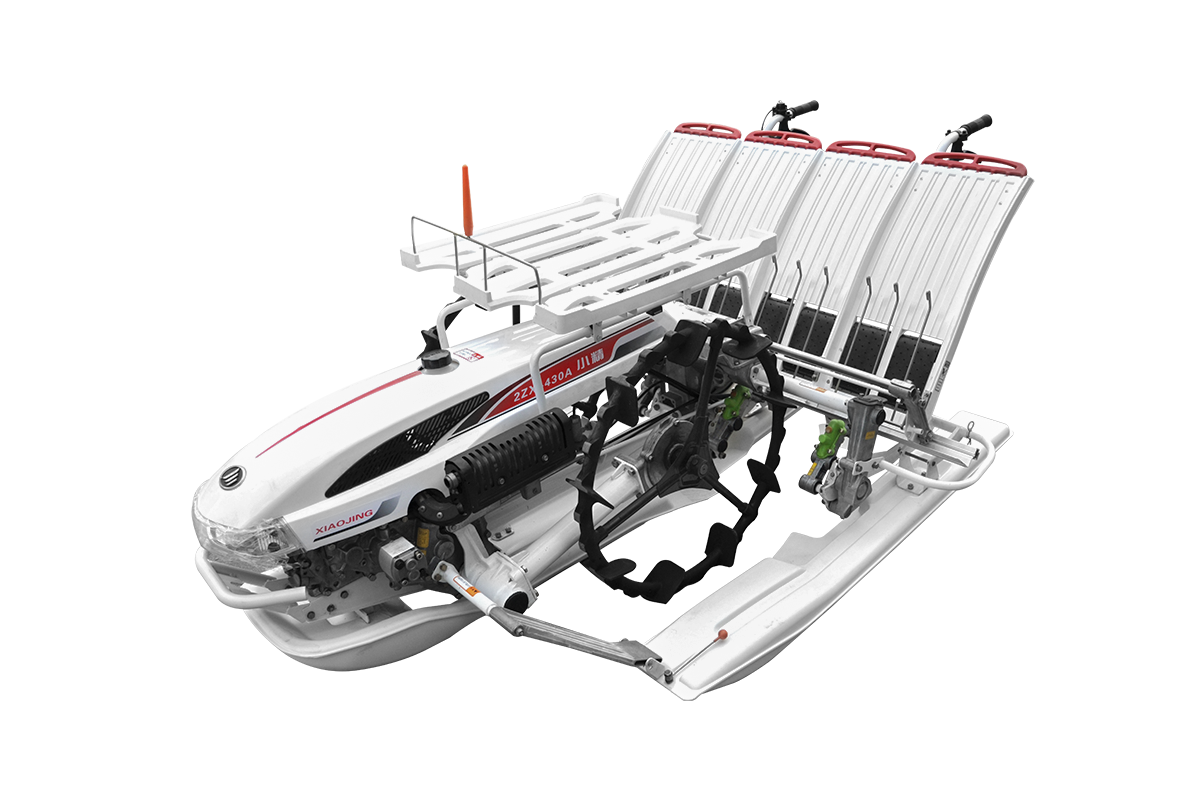 2ZX-430A Four-Row Walking Rice Transplanter with Adjustable DepthThis walking transplanter lets operators set planting depth and row spacing for puddled fields, reducing floating seedlings. Its four-row design balances speed and precision for small to medium farms.View Product →
Where the Walk-Behind Type Wins
- Fields smaller than 2 ha, or plots divided by ridges, canals, and farm roads.
- Hilly and terraced terrain where access roads are narrow and turning space is limited.
- Family teams that plant 1 to 5 ha per season and need an affordable machine.
- Operations that move the machine between scattered plots by hand or small trailer.
The trade-off is speed. Walking pace limits working hours, and the operator carries physical load across a full day. On small acreage that is acceptable; on large contiguous fields it becomes the bottleneck.
Riding Rice Transplanters
Riding transplanters remove the physical constraint of walking speed. The operator sits on a comfortable platform with clear visibility, the machine powers itself through the paddy, and the planting mechanism operates at a pace that can cover more than a hectare per day. Large row counts, six, eight, or ten rows per pass, make the riding type the standard choice for professional rice growers and transplanting teams.
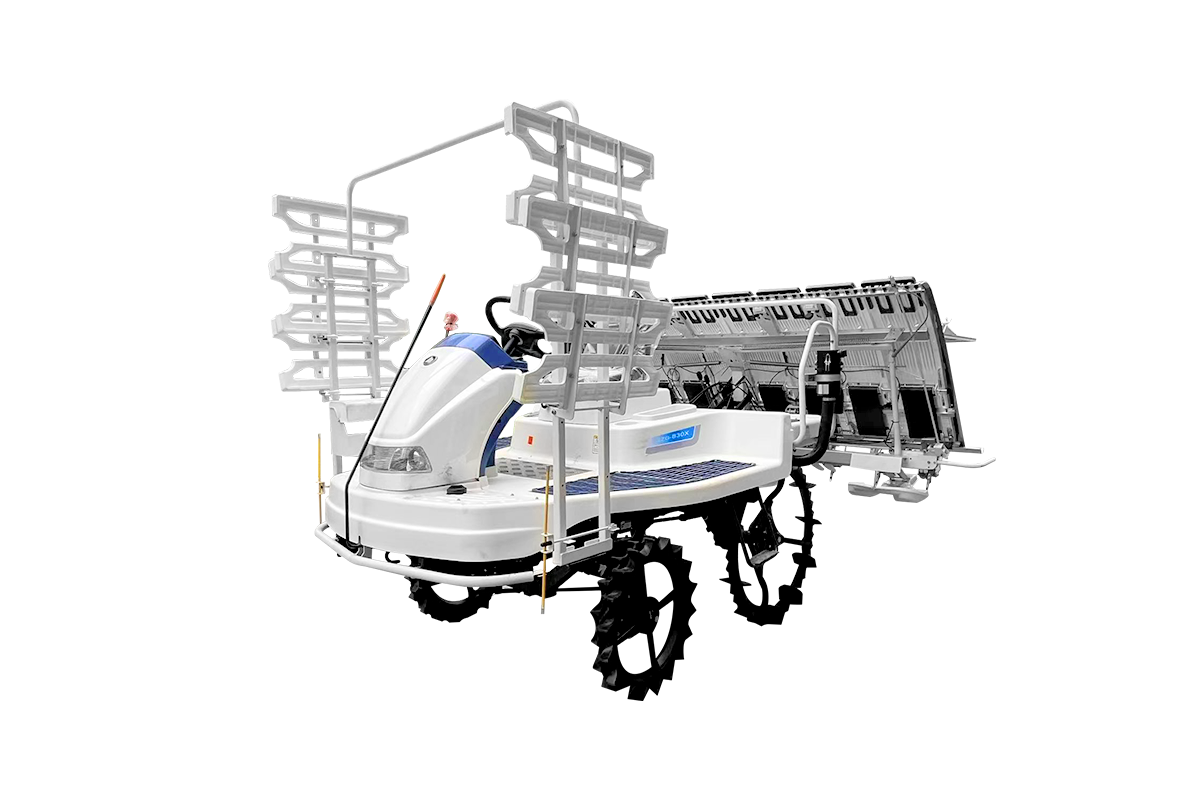
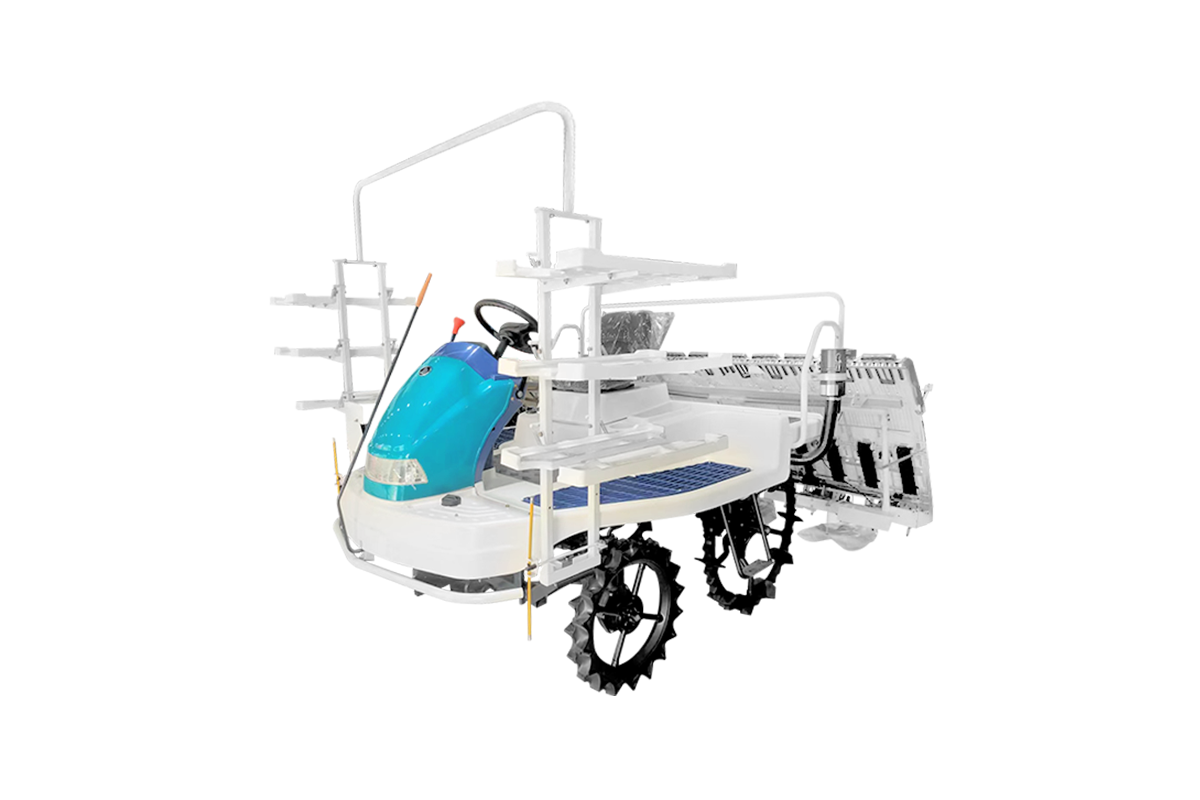
Riding models use larger engines, hydraulic depth control, larger seedling tray magazines, and stronger drive systems for soft paddy soil. A six-row riding transplanter such as the 2ZG-630 can plant roughly ten times the area of a manual worker in the same time, while an eight-row model like the 2ZG-820 cuts the per-hectare planting time further and is a common match for farms managing 5 to 20 ha.
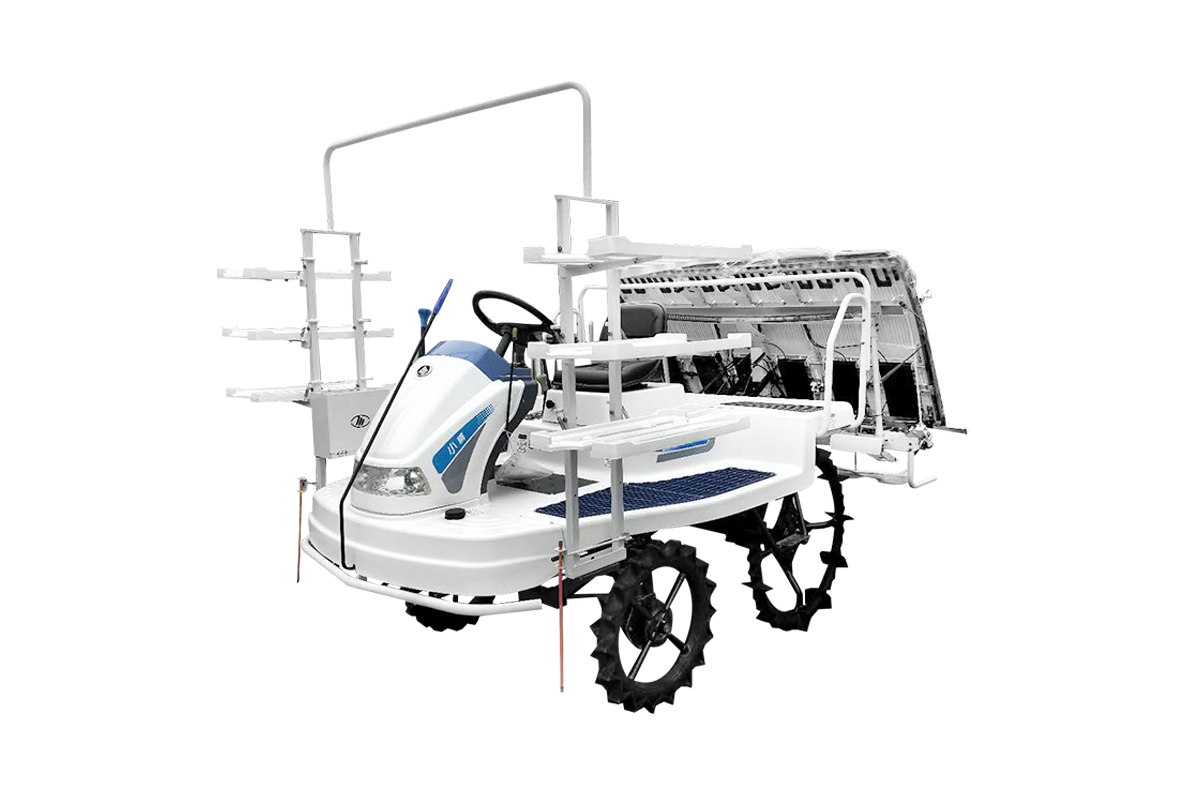 2ZG-630 Six-Row Riding Rice Transplanter for Efficient Paddy PlantingA riding model with hydraulic assist and HST technology, this six-row machine plants about ten times faster than manual work. It suits farms seeking reliable power and ease of operation.View Product →
 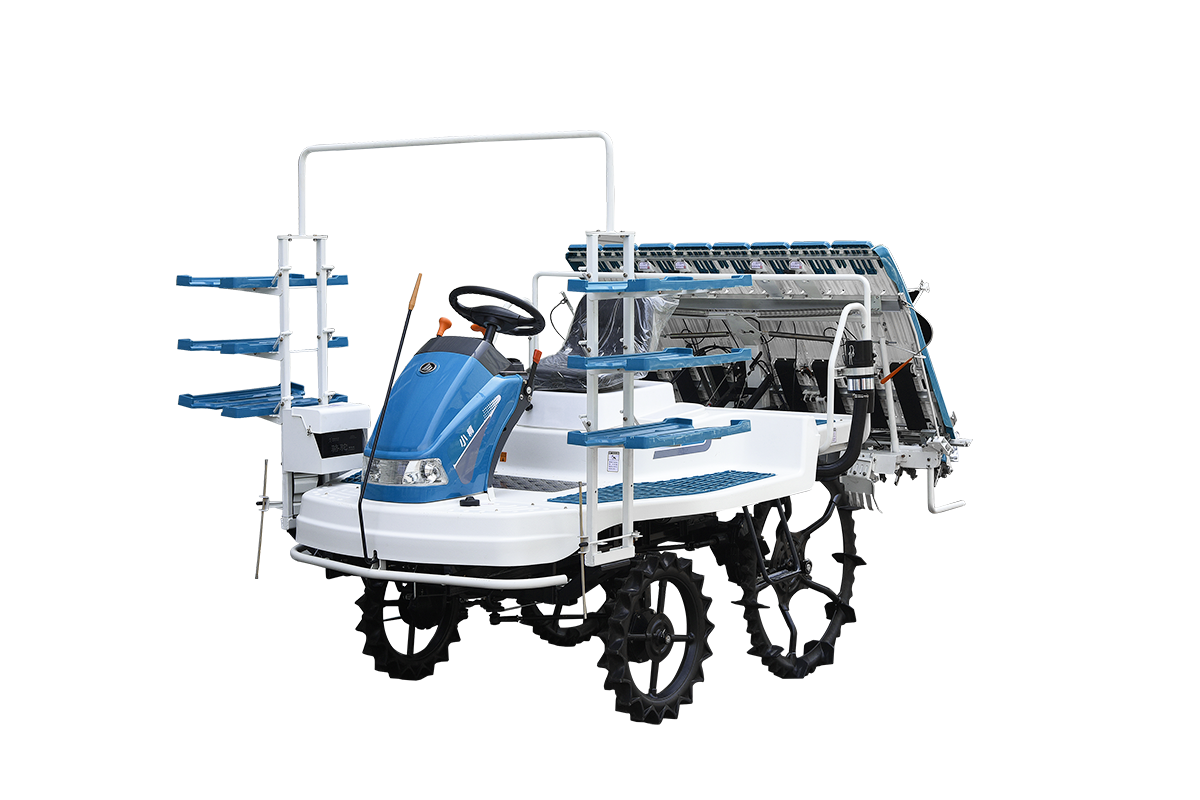 2ZG-820 Eight-Row Riding Rice Transplanter for Large-Scale FieldsWith a powerful engine and four-wheel drive, this eight-row model cuts planting time per hectare. Its automatic seedling box and hydraulic steering suit farms managing 5 to 20 hectares.View Product →
Key Advantages of the Riding Type
- Daily capacity of 1.0 to 4.0 ha, depending on row count, field shape, and soil condition.
- Seated operation reduces fatigue over 8 to 10 hour shifts.
- Consistent planting depth through mechanical or hydraulic depth control.
- Larger seedling trays and rapid feed systems reduce refill stops.
The main barriers are purchase cost and field access. A riding transplanter needs a trailer for road transport, a wide field gate, and a minimum acreage to justify the investment. On farms below 1.5 ha, its cost per hectare is usually too high.
Ten-Row Models for Large Operations
At the top of the range, ten-row riding transplanters can cover 3 to 4 ha per day under good conditions. These machines appeal to transplanting services and large cooperatives that plant for multiple farms. The operator sits higher, the wheel track can be adjusted to match row spacing, and engine power is sufficient to pull through heavy paddy conditions.
For a structured comparison of row count, power system, and fuselage design across models, see our guide on choosing the right rice transplanter machine.
Walk-Behind or Riding: Selection Guide
The decision can be reduced to three questions. How many hectares do you plant per season? How fragmented are the fields? Who will operate the machine? Answer these first, and the transplanter type usually selects itself.
Decision Criteria at a Glance
Choose Walk-Behind When
- Planting area is below 2 ha per season.
- Fields are terraced, irregular, or reached by narrow paths.
- Labor is available but budgets are limited.
- You need one machine for several small scattered plots.
Choose Riding When
- Planting area is 5 ha or more per season.
- Fields are contiguous and accessible by trailer.
- Labor is scarce or expensive during the planting window.
- You want consistent depth and higher daily coverage.
- Field size. Farms under 2 ha per season are better served by a walk-behind model. Farms above 5 ha should seriously consider a riding model.
- Terrain. If plots are on slopes, separated by bunds, or reached by narrow paths, a compact walk-behind machine is more practical.
- Labor. If the team includes older workers or you want to reduce physical strain, a riding model keeps operators fresh for more hours.
- Budget. Calculate cost per hectare, not only the purchase price. A riding machine costs more initially but sharply cuts labor hours.
- Transport. Riding machines require a trailer or truck for road transport; walk-behind units can be loaded manually.
Field layout, water management, and the local rice calendar also matter. In regions where summer storms can close the planting window, the speed of a riding machine protects transplanting quality more reliably.
Cost and labor comparison per hectare for the two transplanter types
| Item |
Walk-Behind |
Riding |
| Equipment investment |
Lower |
Higher |
| Labor per hectare |
2 to 4 person-days |
0.5 to 1 person-day |
| Fuel or power cost per hectare |
Lower power consumption |
Higher fuel consumption |
| Repair and parts |
Simpler, lower parts cost |
More components, higher parts cost |
| Break-even field area |
Any size above manual planting |
Around 5 ha per season |
These same criteria apply to more specific buying situations. Our guide on choosing the right rice transplanter and vegetable transplanter covers multi-crop scenarios, while our analysis of walking versus riding transplanter efficiency explains where each type crosses the productivity threshold.
Daily Coverage Comparison
The chart below shows typical daily transplanting coverage for manual planting, two-row and four-row walk-behind models, and six-row, eight-row, and ten-row riding models. Values assume normal paddy conditions, 25 cm row spacing, and an experienced operator.
2-row walk-behind
~0.2 ha
4-row walk-behind
~0.5 ha
Scale the figures to your own season. A grower with 3 ha of paddy in one compact block will finish transplanting in roughly two days with a six-row riding machine, while a four-row walk-behind would take six or seven days. When the rice calendar is tight, that difference is the decisive factor.
For multi-field operations, transport and refill time matter as much as planting speed. Riding machines carry more seedling trays and travel between plots under their own power, which is why professional contractors consistently prefer them.
FAQ: Common Questions About the Two Types of Rice Transplanters
What is the difference between walk-behind and riding rice transplanters?
The difference lies in the operator position and the machine structure. Walk-behind transplanters require the operator to walk behind the unit, which limits working speed to roughly 0.3 to 0.5 m/s. Riding transplanters carry the operator on a seated platform, allow higher working speed, and usually plant more rows per pass.
Which type of rice transplanter is better for small fields?
A walk-behind type is better for fields below 2 hectares, especially when plots are terraced or irregular. Its lighter weight, narrower width, and simple steering make it easier to move between plots, along bunds, and through narrow gates.
How many rows can a riding rice transplanter plant in one pass?
Riding transplanters typically plant 6, 8, or 10 rows in one pass with standard 25 cm row spacing. Some manufacturers also offer four-row riding models for regions with narrow field entrances or non-standard row spacing traditions.
Can a walk-behind rice transplanter work in wet, soft paddy fields?
Yes, but with limits. Walk-behind models use paddy wheels designed for soft soil, but in very deep mud even a four-row walking machine can sink. Reduce water depth before planting and avoid freshly puddled areas until the soil settles.
Is a riding rice transplanter worth the investment for a 5-hectare farm?
At 5 hectares per season, the math usually favors a six-row riding model because it completes transplanting in two to three days instead of a week, protecting the optimum growth window. The higher purchase cost is offset by lower labor demand and better timeliness.






 [email protected]
 Nr 1819, Renmin West Road, Cao'e Street, dystrykt Shangyu, miasto Shaoxing, prowincja Zhejiang, Chiny